


Accelerating Appropriate Deployment of Low Carbon
Emission Technologies
-
Economic, policy and social issues are often critical barriers to the wide-scale implementation of new technologies. CMC’s social scientists and technology development experts engage in projects to evaluate policies, regulations and frameworks that will provide a regulatory and policy environment conducive to moving new technologies from conception to commercialization.
Theme D research deals with the economic, political and social dimensions of the deployment of low carbon emissions fossil fuels. It engages with the social and economic assessment of technologies; the management of societal risk; the development of regulatory frameworks; innovation and business practices; social learning; public policy; and public engagement.
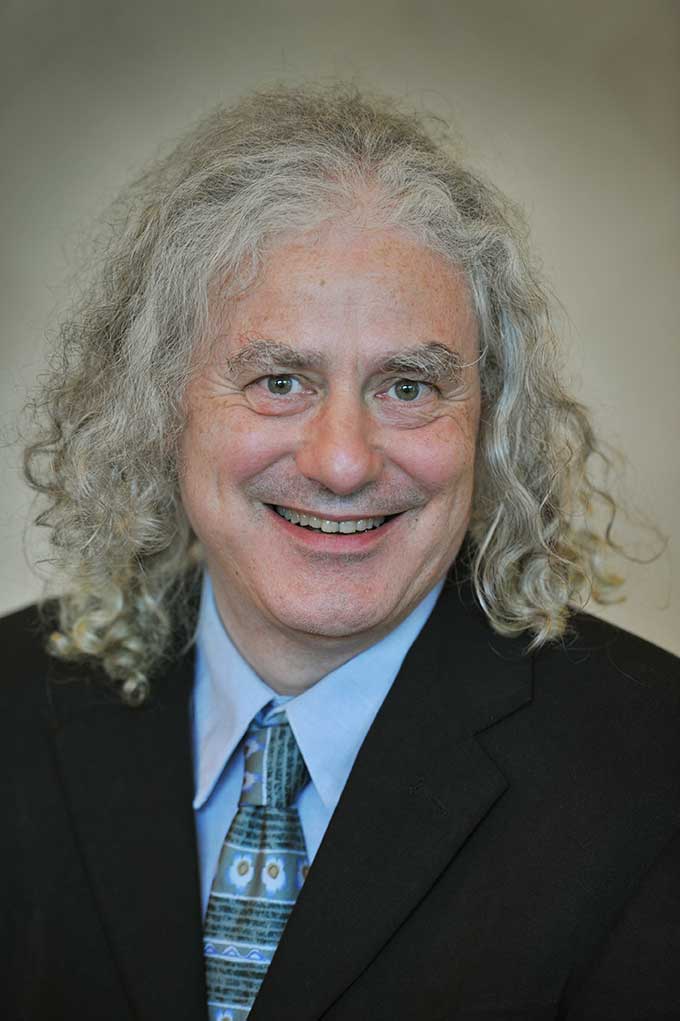 Theme D Lead: Dr. James Meadowcroft
Professor and Canada Research Chair in Governance for Sustainable Development Carleton UniversityDr. James Meadowcroft teaches in both the School of Public Policy and Administration and in the Department of Political Science at Carleton. He is also Associate Editor of the Journal of Political Ideologies. His research is focused on the ways in which governments are adjusting their practices and policies in order to cope with the emergence of problems of the environment and sustainable development.
He also investigates how citizens can work towards sustainability by improving production and consumption methods. He has written on environmental politics and policy, democratic participation and deliberative democracy, national sustainable development strategies, and socio-technical transitions. Recent work deals with sustainable energy policy and climate mitigation technologies such as carbon capture and storage. He has a BA in Political Science from McGill University and a doctorate from the University of Oxford.
-
D01 Assessing the potential of low carbon fossil-fuel/derived technologies: A life cycle environmental and techno-economic evaluation of the oil sands
Principal Investigators:
Heather MacLean, UToronto; Joule Bergerson, UCalgary; David Keith, UCalgary
Summary:
The rapid development of Alberta’s bitumen resources offers significant economic benefits while posing complex social and environmental challenges. The objective of the research is to improve scientific understanding of the life cycle implications of various greenhouse gas mitigation strategies that could be applied in the development of a major resource critical to Canada’s future: Alberta’s oil sands. A state-of-the-art model will be developed and applied to inform R&D, operating strategies and policy making through identifying tradeoffs and implications of different carbon management scenarios based on an evaluation of their environmental and economic implications, technical feasibility and regulatory aspects.
Go To TopD02 Assessing the potential of low carbon fossil fuel / derived technologies: developing modeling and analytical tools for assessing the potential contribution of carbon management to Canadian GHG emission reduction
Principal Investigators:
Mark Jaccard, Simon FraserU; John Nyboer, Simon FraserU; James Meadowcroft, CarletonU
Summary:
There is a growing body of research estimating some aspect of CCS potential with respect to specific industrial applications that produce or could store carbon emissions. Most of this research, however, is project specific, rich in technological, geological, industrial and perhaps economic information, but lacking integration into a broader systems analysis that assesses the prospects of such a project when other factors of social choice are considered. The objective of this proposed research is to develop and apply analytical tools that integrate information from several disciplines to assess the technical, economic, and social institutional policy potential for CCS deployment in Canada. These tools would enable governments, industry, environmentalists, and researchers to assess the potential contribution of CCS relative to other GHG emissions reduction options throughout Canada and within specific regions.
Go To TopD03 Governance innovation and the transition to a low carbon economy
Principal Investigators:
James Meadowcroft, CarletonU; Doug Macdonald, UToronto; Glen Toner, CarletonU
Summary:
This project is concerned with innovation in governance practices to address climate change and accelerate the transition towards a low carbon Canada. It takes two basic approaches to explore institutional reforms that could strengthen climate governance in Canada. First, it addresses the particular issue of distributional conflicts potentially associated with climate-change policies (such as inequitable effects imposed upon the poor by a carbon tax). Second, the project examines the systems for climate governance established by six jurisdictions with particularly active climate policy (UK, Netherlands, Germany, Denmark, Sweden and the EU). Research will reveal how these systems operate in each jurisdiction and, more importantly, will identify specific institutional innovations that hold wider promise. The two approaches will provide lessons about innovative governance practices to encourage the transition to a low carbon Canada. Conclusions will be shared with political decision makers, other interested stakeholders and the academic community.
Go To TopD05 National and international legal and regulatory framework for carbon management
Principal Investigators:
Nigel Bankes, UCalgary; Meinhard Doelle, DalhousieU; Shi-Ling Hsu, UBC; Shaun Fluker, UCalgary
Summary:
The main objective of this project is to contribute to the development of an international and domestic legal and regulatory framework that is able to respond to and accommodate the creation of new carbon efficient recovery and processing technologies. The project has three research objectives: (i) to examine at the national level the property, regulatory and liability issues associated with new carbon efficient technologies; (ii) to examine how new technologies and carbon management measures can be integrated with and credited within cap and trade and offset regimes at both the national and international levels; and (iii) to examine the relationship between carbon management measures and international trade and investment law.
Go To TopD201 Carbon policy uncertainty, investment decisions, and commercial feasibility of carbon capture and storage technology
Principal Investigators:
Janne Kettunen, UCalgary; Jared Carbone, UCalgary; Mark Jaccard, Simon Fraser U
Summary:
Different policies and technological advances will favor different strategies to reduce CO2 emissions, and yet power generating companies must make investment decisions and commit to particular generating technologies while Canadian carbon policies are still uncertain. Investigators will analyze the economics of carbon management. Their models, which will take into account both the reductions in CO2 emissions and the financial impacts of various energy generation and carbon-reduction strategies, will help clarify which strategies and policies will be most cost-effective.
Go To TopD215 Towards effective engagement: Assessing stakeholder attitudes and public controversy surrounding greenhouse gas mitigation energy systems
Principal Investigators:
Edna Einsiedel, UCalgary; Stephan Hill, Trent U; Karena Shaw, UVictoria; Clare Demerse, Pembina Institute
Summary:
Stakeholder and public attitudes towards greenhouse gas-mitigating technologies are the focus of this investigation. The team hopes to engage the public in discussion to find out how and why people make the judgments they do about given technologies, including hydroelectric power and wind power in Ontario, and carbon capture and storage in Alberta. The multi-institution collaboration will enable the researchers to compare views on energy technologies in four Canadian provinces.
Go To TopD228 Understanding barriers to low-carbon technology investments in the oil and gas industry: A managerial cognition perspective
Principal Investigators:
Natalie Slawinski, Memorial U of Newfoundland; Pratima Bansal, U of Western Ontario; Frances Bowen, UCalgary
Summary:
These business experts have joined forces to study perceptions of CCS held by managers in the oil and gas industry. In particular, the researchers will examine how managers’ perceptions of barriers influence decisions to invest in CCS technologies and what executives and policy makers can do to overcome these barriers.
Go To TopD240 Risk assessment and management of carbon capture and storage in a Canadian context
Principal Investigators:
Daniel Krewski, UOttawa; Mamadou Fall, UOttawa; Jatin Nathwani, UWaterloo; Robert Gracie, UWaterloo; L. Shawn Matott, UWaterloo; James Craig, UWaterloo; Maurice Dusseault, UWaterloo; Joseph Arvai, UCalgary
Summary:
In a transdisciplinary collaboration, researchers will develop a tailored-for-Canada framework for risk assessment and management of CCS. The project will involve eight research groups who will contribute expertise in engineering, social sciences, economics, policy analyses and communications. The first goal will be to understand the technical and scientific aspects of putting CO2 deep in Earth’s crust. In the second phase of the project, the researchers will apply management strategies and models developed for other technologies, as well as more recent findings, to the specific case of CCS.
Go To TopD241 A comparative life cycle assessment of three technologies: Post-combustion and pre-combustion capture and oxyfuel, combined with CO2-EOR and storage
Principal Investigators:
Paitoon Tontiwachwuthikul, U of Regina; Christine Chan, U of Regina; Malcolm Wilson, U of Regina; Anastassia Manuilova, U of Regina; Darryl Dormuth, National Research Council
Summary:
The environmental effects of three technologies to reduce CO2 emissions from fossil-fuel based power plants is the focus of this study. Post-combustion capture, pre-combustion capture, and using oxyfuel technology all require some energy for operation, although the overall goal is to reduce CO2 emissions. In order to provide industry and decision makers with a solid comparison of the environmental performance of these carbon reduction methods, the researchers will use a life-cycle approach to consider all environmental impacts of the technologies, from construction through operation, including energy and raw material consumption, emissions and wastes.
Go To TopD243 Achieving a low-carbon, globally competitive energy economy: Removing barriers and cultivating enablers to innovation in Canada’s oil sands and heavy oil industry
Principal Investigators:
Harrie Vredenburg, UCalgary; Luis Escobar, ULethbridge; Adam Fremeth, UWestern Ontario; Louis Rinfret, UQuebec (Trios-Riveires); Nancy Higginson, UCalgary
Summary:
This multi-institution collaboration will study innovation issues in Canada’s oil sands and heavy oil industry. The researchers will take lessons on industry failures and successes from a wide range of companies in the oil sands and heavy oil sector and beyond to identify both barriers and enablers to innovation in these arenas.
Go To TopManaging the leak? A study of media, risk and crisis communication associated with the report of leakage at the Weyburn CCS facility.
Project investigators:
James Meadowcroft, Carleton U; Edna Einsiedel, UCalgary
Summary:
In January 2011, media seized on claims that CO2 was leaking from the Weyburn CO2 storage site. Although industry and government moved to reassure the public about the safety of the site and CCS, the story draws attention to the role that adverse incidents can have on public perceptions of novel technologies. James Meadowcroft, Carleton University, and Edna Einsiedel, University of Calgary, are leading an international team of researchers who will examine media content, public communication by principal stakeholders and interviews with important actors involved in the Weyburn incident.
D363 Low carbon fuel demonstration pilot plant for the cement industry
Principal Investigators:
Warren Mabee, Queen’s University; Andrew Pollard, Queen’s University
Partners/Contributors:
Cement Association of Canada, World Wildlife Federation Canada
Summary:
In this collaborative effort involving academic researchers, the Cement Association of Canada, and the World Wildlife Federation Canada, six different low carbon biofuels will be co-fired with fossil fuels. Manufacturing cement requires large inputs of energy in order to heat the cement kiln to temperatures of up to 1450 Deg C. Normal practice is to combust fossil fuels such as coal and petroleum cokes. Replacing some of those fuels with low carbon fuels such as construction & demolition wood and railway ties, will result in a net reduction in GHG emissions because biofuels are carbon neutral (CO2 is removed from the atmosphere in the biomass and then released during combustion). Further, the re-use of fossil-derived fractions within the mixed low carbon fuels will increase fossil resource usage efficiency.
One key aspect of the project is to increase the feed rate of low-carbon alternative fuels. The change in gas emissions from the plant, expected to be beneficial, will be monitored and well as the effect of the various fuels on the physical and chemical properties of the cement produced, through life cycle assessment.
D387 Designing carbon pricing policy to drive innovation in low carbon technologies and practices
Principal Investigators:
Randal Wigle, Wilfrid Laurier University; Nicholas Rivers, U of Ottawa; Stewart Elgie, U of Ottawa; Jared Carbone, U of Calgary; Yazid Dissou, U of Ottawa; Madanmohan Ghosh, Environment Canada
Partners/Contributors:
Environment Canada, Sustainable Prosperity
Summary:
A barrier to the adoption of a carbon price is the perceived economic cost. This venture work will develop a model that advances the capacity to design carbon pricing policies that maximize innovation incentives while minimizing economic and social costs. There are two key questions this research will explore: 1) what drives innovation in technology and in practices required to achieve GHG reductions; and 2) how can associated economic and social costs be minimized. This work will result in the development of a computable general equilibrium (CGE) model that could help address economic concerns regarding carbon pricing.